Cloud-native Architecture
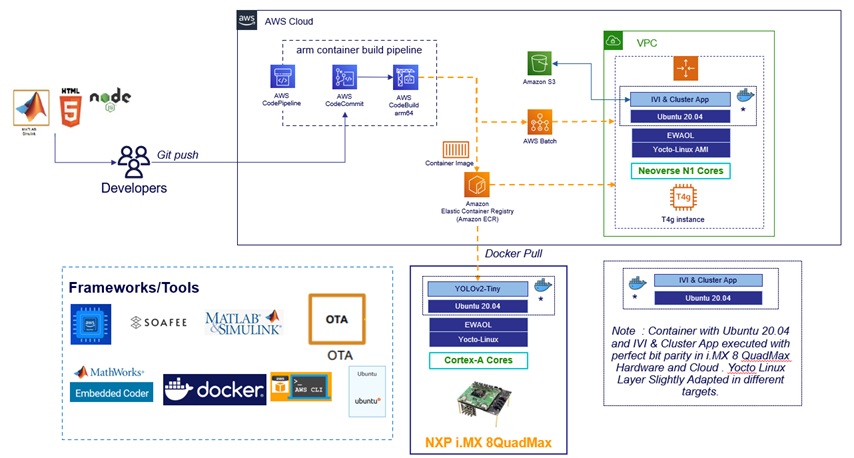
Cloud to Edge implementation of Automotive features built using AWS Graviton EC2 instance deployed on NXP iMX8 hardware.
Conversational AI
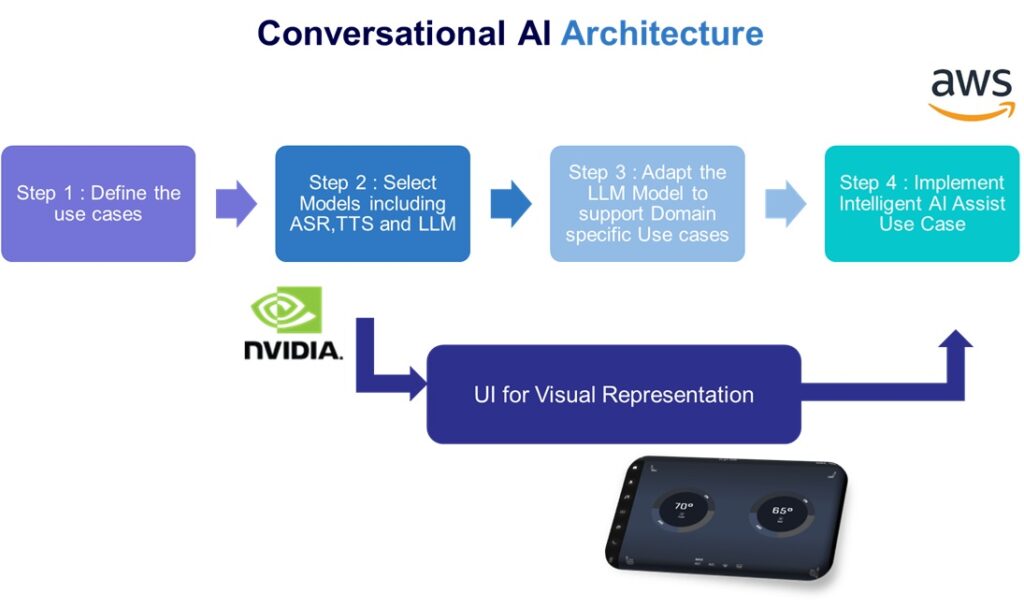
Enhanced in‑vehicle Conversational AI capabilities by introducing a natural‑language–driven climate‑control system built on the NVIDIA toolchain and AWS cloud services. The solution integrates NVIDIA NIMs with Cognizant’s AWS‑based architecture running on EC2 G‑series instances powered by Arm v8. Using advanced ASR pipelines, the system converts driver voice commands into precise text outputs, which are then translated into CAN messages for seamless, hands‑free actuation of climate functions—improving usability, safety, and overall driving experience.
ECU Virtualization
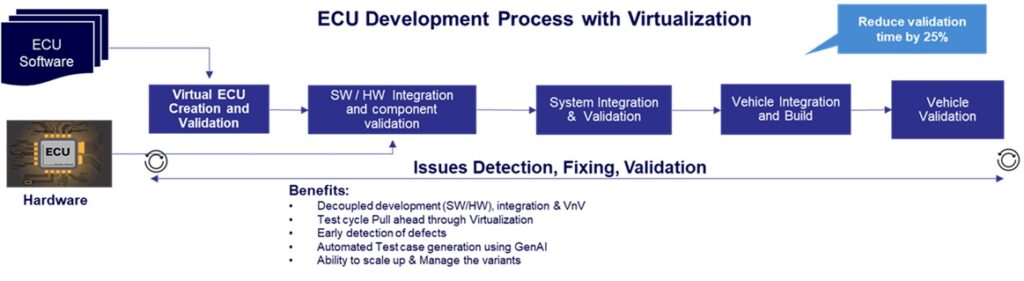
Virtual validation is a process in which we create Virtual ECU (VECU) that enables developers to test ECU software early in the development phase within a desktop-based environment. Traditional ECU testing depends on costly, late-available hardware prototypes with incomplete software, delaying issue detection and increasing R&D costs. This ECU virtualization approach helps identify integration issues early, enhances software completeness, reliability and provides a scalable, efficient and reliable testing enviornment.
Gen AI Based Test Case Generation
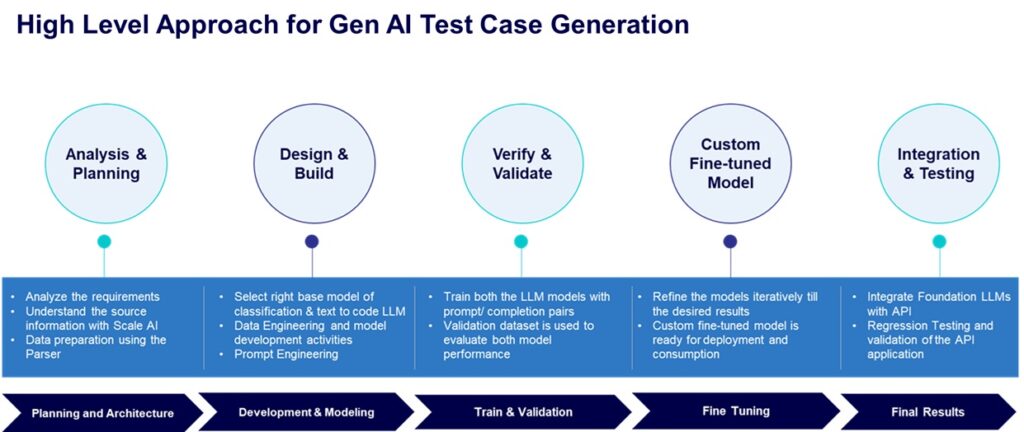
Test case writing is a time-consuming aspect of validation activities, often prone to manual errors. Ensuring comprehensive test coverage and maintaining traceability are persistent challenges. By harnessing the power of LLMs, we can streamline the test case generation process, thereby reducing the likelihood of errors and enhancing overall efficiency.
Voice AI-Powered Seat Massage Experience
Developed an innovative Voice‑AI–driven solution that integrates Sensory’s speech capabilities with Gentherm’s seat‑control module. Built on advanced NLP tools, the system enables seamless, hands‑free actuation of seat functions, enhancing both safety and occupant comfort by eliminating the need for manual interaction.
Digital Twin
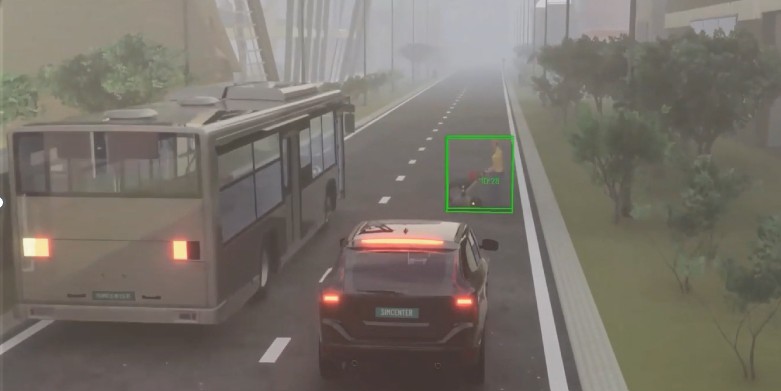
Championed the adoption and integration of the Siemens PAVE360 toolchain to build high‑fidelity digital twins for system‑of‑systems verification and validation in ADAS and Autonomous Vehicle programs. Designed an architecture that leverages PAVE360 Backplane, ANA, and PreScan components to seamlessly connect perception, planning, annotation, and decision‑making clients within a unified simulation environment. Developed advanced ADAS applications—including Intelligent Speed Assist, Adaptive Cruise Control, and Automatic Emergency Braking—that accelerated validation cycles and enabled a true shift‑left methodology for safer, more predictable, and scalable vehicle development.